Majewski Studio

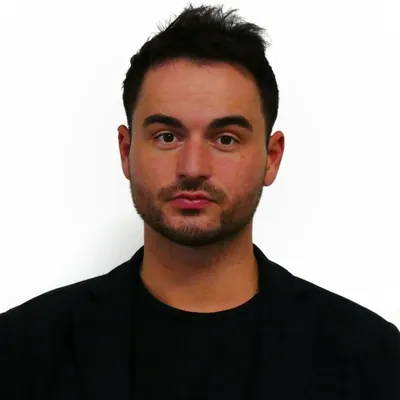
Portrait of Jakub Majewski. Software developer and researcher
Munich

Jakub Majewski

I'm a software developer and researcher in Munich. I like the whole way from an idea to the thing people use, so I build it end to end: XR apps, real-time 3D from engineering CAD, machine learning that knows how sure it is and knowledge tools a team shares with its AI agents. At TUM I research Gaussian Splatting, which turns photos into 3D scenes that render in real time.

Selected work

Seven projects from research and industry, each with a full case study on GitHub

Two hands holding the ends of a ruler across an aligned 3D dental scan on Apple Vision Pro; the ruler shows the distance in millimetres.
Measuring a dental scan by hand
The jaw bone and teeth from a CBCT scan, shown inside the aligned 3D model on Apple Vision Pro.
Jaw and teeth from the CBCT

Industry · Client project · Apple Vision Pro

receptionOS Visualizer

Puts a patient's face, jaw and 3D X-ray scans into the room, lined up in 3D. You walk around them and measure in millimetres by hand.

It's a deliberate hybrid. SwiftUI runs the native product shell and Unity with URP and Metal runs the 3D. The ruler snaps to the scan surface even across two aligned models like a jaw and its CBCT. I took it from an early proof of concept to the client release.

visionOS SwiftUI Unity C# Metal

Read the case study

Top-view schematic of stereo mirrors on visionOS: each eye gets its own reflected camera, with an off-axis frustum through the mirror outline.
One reflected camera per eye
Diagram of head-up display clipping in mixed reality, tested per pixel against the visible area of the windshield.
HUD clipping checked from 90 head positions

Industry · In-house application · Apple Vision Pro

Automotive XR

You sit in a full-size car on Apple Vision Pro, open the doors and turn the wheel with your bare hands. Then you compare variants on the spot.

I continued it from an earlier research prototype. The work is in the parts a headset makes hard. Mirrors that show each eye its own reflection without planar reflections. Glass and HUD drawn in the right order. A HUD clipped per pixel against the windshield from either front seat. And a 20,000-line C# codebase moved to Unity 6.3 and PolySpatial 3.

Unity PolySpatial RealityKit C#

Read the case study

One quilted leather material shown under four lighting presets: city midday, courtyard, night street and sunset.
One material under four lighting presets
An example part in six stages, from the original CAD through tessellation, reduction, repair and UVs to real-time materials.
From engineering CAD to real-time materials

Industry · From engineering CAD to real time

Automotive content pipeline

Turns exact and heavy engineering CAD into 3D that looks right up close and still runs on a headset.

I got a CAD toolkit into the project without breaking it. Quilting is cut exactly along the design lines in the CAD mesh and the stitches are real geometry. 138,254 collider triangles became 30 fitted shapes.

Python Blender Unity Asset Transformer (formerly Pixyz) Unity

Read the case study

A graph of connected engineering knowledge: dense clusters of sources linked to decisions and checks.
What the project knows, drawn from the links between its pages
The same knowledge graph from another side: linked pages in colour in the middle, clusters of source files in grey around them.
Linked pages in colour and their source files in grey

Tooling · Local engineering knowledge system · Version 2.0

LEKS

What a long engineering project knows, in one local folder that stays consistent and recoverable. The team reads it in Obsidian and its AI coding agents get short answers with sources from it.

Version 2.0 is the one in use. I rebuilt everything under the search with a persistent BM25 index, exact copies of all 2,850 source files addressed by hash and claims that point to the lines they rest on. It returns the same rankings as 1.0 on all 941 test questions while page search got 176 times faster and the full integrity check dropped from 1,602 MB to 82 MB of peak memory.

Python Information retrieval MCP Obsidian

Read the case study

Predicted against true heating and cooling loads on held-out designs; the points follow the diagonal.
Held-out predictions for heating and cooling
Reliability curve comparing the stated interval coverage with how often the intervals actually contained the truth.
Checking if the intervals hold

Research · Machine learning · TUM

Probabilistic building energy prediction

Predicts how much heating and cooling a building design needs and tells you how far to trust each prediction.

Ridge regression, a 300-tree random forest and exact Gaussian-process regression on the same held-out splits. The forest was more accurate on heating load and the Gaussian process on cooling, where it also brings its own uncertainty, so I kept the trade-off visible. The intervals are checked for calibration and against split-conformal prediction. 11 automated tests and CI.

Python scikit-learn Uncertainty quantification

Read the case study

The avatar tutor condition: blurred lesson slides on the left, a speaking AI avatar, the participant's blurred camera and a live transcript on the right.
The avatar tutor talks the lesson through
The text tutor condition: an AI tutor chat that answers questions about the lesson.
The text tutor the other group learned with

Research · Human-AI interaction · TUM

AI Study Buddy

A full study platform built around one question. Does a speaking avatar tutor teach differently than a text chat?

As technical and product lead of a five-person student team I turned the study concept into the architecture and built the platform end to end. Participants go through consent and a baseline test, learn with one of two tutors and finish with a post-test. The platform logs everything, flags bad sessions and exports data ready for analysis. Across the study correct answers on one key question went from 23% before to 95% after.

Human-AI interaction User study

Read the case study

About

I study Management & Technology at TUM with Computer Engineering as my technology specialization. I'm also Head of Strategic Development at TUM-XR, the university's student XR initiative, and a Senior Associate at XR Association Munich e.V.

Experience

  1. XR engineer on an automotive Apple Vision Pro application
  2. Apple Vision Pro development for client projects
  3. 2023 to 2025Digital product developer for XR in industrial engineering

Tools Python, C#, Swift · PyTorch, NumPy, scikit-learn · Unity, PolySpatial, RealityKit, SwiftUI, Metal · Blender, Unity Asset Transformer (formerly Pixyz) · Google Cloud

Contact